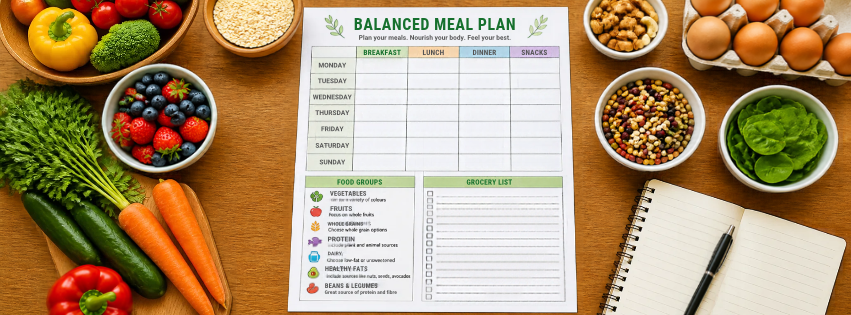
“This worksheet is for anyone new to meal planning who wants a simple way to organise balanced meals and a weekly grocery list.”
Everything in our lives requires proper planning, whether it is our daily work or our food. We need to plan our daily activities, such as what time we will wake up, when we will leave for work, how long we will work, and so on.
Similarly, eating food is essential for our survival. However, we also need to plan what to eat, when to eat, and how much to eat. This is important because if we do not consume food according to our body’s nutritional requirements, it can negatively affect our health and eventually lead to various illnesses.
If you are overweight and want to lose weight, you need to plan your diet accordingly. This does not mean you have to skip meals. Instead, you need to make a proper food plan that helps you lose weight while ensuring that your body receives the required amount of protein, vitamins, and other essential nutrients.
Similarly, if you are underweight and want to gain weight, you need to plan your diet differently to meet your body’s requirements.
In this guidebook, we will discuss the basics of diet planning, especially for people who are planning their diet for the first time.
This guide includes a beginner-friendly worksheet you can copy into a notebook, spreadsheet, or printable template. It focuses on flexibility: you choose foods you enjoy while keeping vegetables, protein, grains, fruit, and healthy fats in the plan.
What Is a Balanced Meal?
A balanced meal includes foods from several food groups rather than relying on a single type of food. A practical starting point is to fill half your plate with vegetables and fruit, one quarter with protein foods, and one quarter with grains or starchy carbohydrates. Add dairy or a fortified alternative if it suits your diet.
The USDA MyPlate framework features fruits, vegetables, grains, protein sources, and dairy or fortified soy products. Oils are included in a nutritious diet, as they supply vital fatty acids and vitamin E. You do not need every meal to be perfect. The goal is to create a balanced pattern across the day and week, choosing a variety of foods from each group.
Why Beginners Need a Worksheet
Novices frequently face difficulties in meal planning as they attempt to plan numerous meals, purchase unfamiliar ingredients, or adhere to complex guidelines. A worksheet addresses this by transforming healthy eating into a consistent weekly habit.
A simple worksheet helps you:
- Plan meals before grocery shopping.
- Reduce last-minute takeout decisions.
- Use food already in your refrigerator, freezer, and pantry.
- Include different food groups throughout the week.
- Create a focused shopping list.
- Save time by repeating easy meals.
My plate recommends checking what you already have at home, planning meals and snacks for the week, and then writing a shopping list based on what you still need.
Balanced Meal Planning Worksheet
Copy this template into a document or notebook. Keep it simple for your first two weeks.
Weekly Balanced Meal Planning Worksheet
| Day | Breakfast | Lunch | Dinner | Snack | Food Groups Included |
| Monday | |||||
| Tuesday | |||||
| Wednesday | |||||
| Thursday | |||||
| Friday | |||||
| Saturday | |||||
| Sunday |
Daily Food-Group Checklist
Tick each group as you include it during the day:
- Vegetables:
- Fruits:
- Grains or starchy carbohydrates:
- Protein foods:
- Dairy or fortified alternative:
- Healthy fats:
- Water or other unsweetened drinks:
Grocery List Sections
- Vegetables:
- Fruits:
- Whole grains:
- Protein foods:
- Dairy or fortified alternatives:
- Healthy fats:
- Herbs, spices, and condiments:
How to Fill In the Worksheet
Start by choosing meals you already know how to make. You do not need new recipes every day; repeating breakfasts and lunches is normal and makes meal planning easier.
Step 1: Choose Three Repeatable Breakfasts
Pick simple options such as oats with fruit, eggs with whole-grain toast, yoghurt with berries, or a smoothie with fruit and milk or a fortified alternative. Whole fruits, vegetables, grains, protein foods, and dairy or fortified soy alternatives are core MyPlate food groups.
Step 2: Plan Easy Lunches
Use leftovers, sandwiches, salads, wraps, soups, or grain bowls. A lunch does not need to be elaborate; it only needs to include a protein source, a vegetable or fruit, and a grain or starchy carbohydrate.
Step 3: Build Simple Dinners
Use this formula: protein + vegetable + grain + healthy fat. For example, grilled chicken or beans, roasted broccoli, brown rice, and olive oil make a balanced, beginner-friendly dinner.
Step 4: Add One or Two Snacks
Choose snacks that satisfy hunger without replacing meals. Good examples include fruit with yogurt, nuts, hummus with vegetables, whole-grain crackers with cheese, or a boiled egg.
Step 5: Make the Grocery List
Write only the ingredients you need after checking your kitchen. Include fresh, frozen, canned, and shelf-stable options from each food group; frozen and canned produce can be practical choices when fresh options are inconvenient.
A Simple Balanced Plate Formula
For beginners, the easiest approach is to use a plate method rather than counting every calorie. The CDC describes a plate method where half the plate is non-starchy vegetables, one quarter is lean protein, and one quarter is carbohydrate foods.
| Plate Section | Beginner-Friendly Examples |
| Half plate: Vegetables | Salad, broccoli, spinach, carrots, peppers, green beans, cucumber |
| One quarter: Protein | Chicken, fish, eggs, tofu, beans, lentils, Greek yoghurt |
| One quarter: Carbohydrates | Brown rice, whole-wheat pasta, potatoes, quinoa, whole-grain bread |
| Optional addition | Fruit, milk, fortified soy drink, yoghurt, olive oil, nuts, or seeds |
This method is especially useful because it does not require weighing food or tracking every nutrient. It gives beginners a visual structure while still allowing flexibility.
Sample Beginner Week
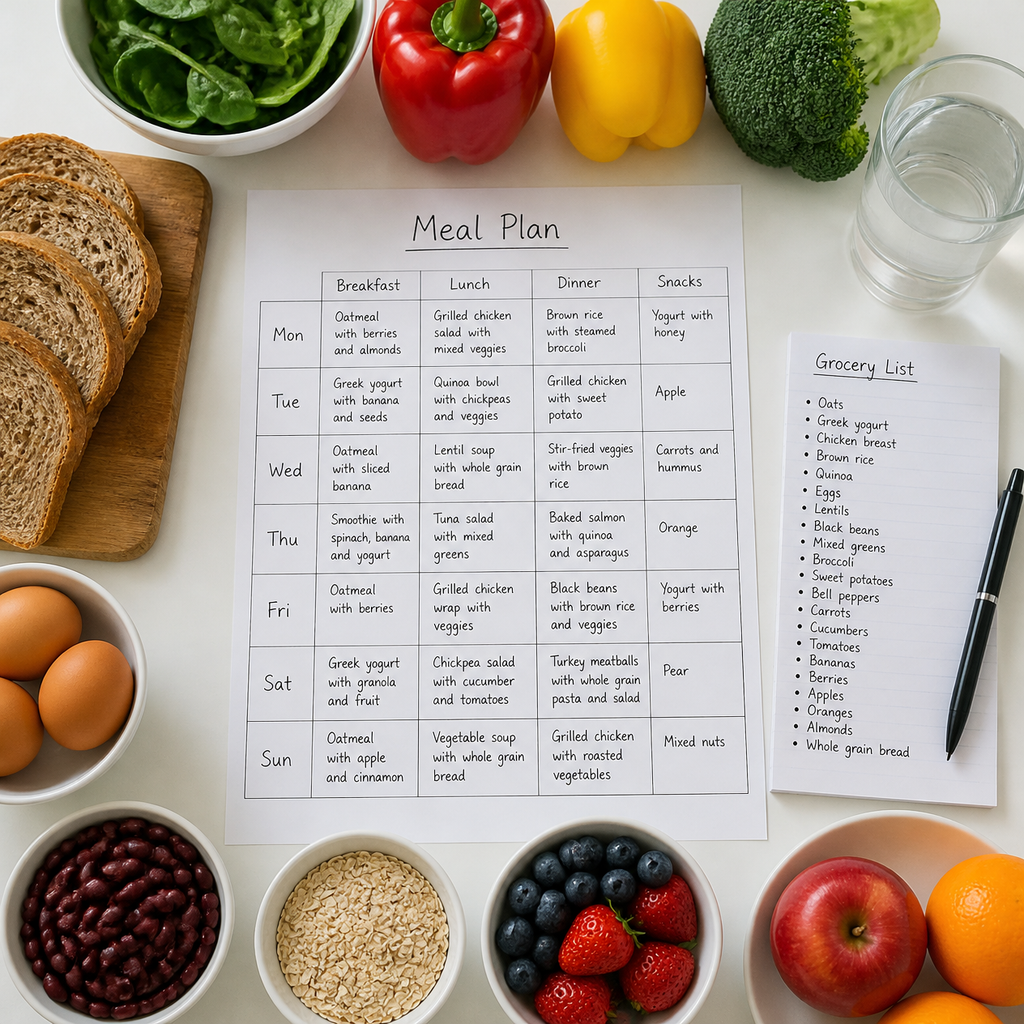
Here is an example of how to use the worksheet without making the plan complicated.
| Day | Breakfast | Lunch | Dinner | Snack |
| Monday | Oats, banana, milk | Chicken salad sandwich, fruit | Beans, rice, vegetables | Yoghurt |
| Tuesday | Eggs, whole-grain toast, fruit | Leftover rice and beans | Pasta with vegetables and lean meat | Nuts |
| Wednesday | Yoghurt, berries, granola | Vegetable soup, whole-grain roll | Baked fish, potatoes, salad | Fruit |
| Thursday | Smoothie with fruit and milk | Wrap with eggs and vegetables. | Stir-fried tofu, rice, vegetables | Hummus and carrots |
| Friday | Oats with apple | Leftover pasta | Homemade pizza with vegetables and salad | Yoghurt |
| Saturday | Eggs and toast | Grain bowl with beans | Chicken or tofu curry with rice | Fruit |
| Sunday | Pancakes with fruit | Soup and sandwich | Roast vegetables, potatoes, protein | Nuts |
This sample shows that balanced eating can include familiar foods. The aim is variety and reasonable portions, not perfection.
Smart Grocery List Basics
A beginner grocery list should include foods you will genuinely eat. Start with a small list and add variety gradually.
- Vegetables: Spinach, carrots, broccoli, tomatoes, onions, frozen mixed vegetables.
- Fruits: Bananas, apples, oranges, berries, frozen fruit.
- Grains: Oats, brown rice, whole-wheat bread, whole-wheat pasta, potatoes.
- Protein: Eggs, chicken, fish, tofu, beans, lentils, peanut butter.
- Dairy or alternatives: Milk, yoghurt, cheese, fortified soy milk.
- Healthy fats: Olive oil, nuts, seeds, avocado.
- Flavour basics: Garlic, herbs, spices, lemon, vinegar, low-sodium sauces.
Choose whole-grain options where possible, include a variety of protein foods, and limit foods high in added sugar, saturated fat, and sodium.
Portion Guidance for Beginners
You do not need a food scale to begin. The CDC suggests practical hand-based estimates: a palm-sized portion for meat, fish, or poultry; a fist-sized portion for one cup or a medium fruit; and a cupped hand for one to two ounces of nuts or pretzels.
Use these simple portion cues:
- Vegetables: Aim to fill half your plate.
- Protein: Keep it to about one quarter of the plate.
- Grains or starchy foods: Keep them to about one quarter of the plate.
- Fruit: Add one serving with breakfast or as a snack.
- Healthy fats: Use a small amount, such as olive oil, nuts, or seeds.
Portion size matters because the amount you eat affects overall calorie intake, even when the food itself is nutritious.
Common Beginner Mistakes
Avoid these common issues when using a balanced meal planning worksheet:
- Planning too many new recipes in one week.
- Buying expensive ingredients you will not use.
- Skipping vegetables because they feel inconvenient.
- Trying to make every meal identical or perfectly balanced.
- Forgetting snacks and then relying on highly processed foods.
- Ignoring foods you already have at home.
- Giving up after one imperfect day.
A balanced diet is about variety, proportions, and consistency over time—not strict rules or a perfect plate at every meal.
Make the Worksheet Work for You
Use the worksheet for two weeks, then adjust it. Keep meals your household enjoyed, replace meals that felt inconvenient, and repeat ingredients to reduce waste. MyPlate provides personalised food-group targets based on age, sex, height, weight, and activity level, which can help you tailor the plan further.
A balanced meal planning worksheet works best when it is realistic. Start with meals you like, use foods you can afford, and aim for progress rather than perfection.
Final Thoughts
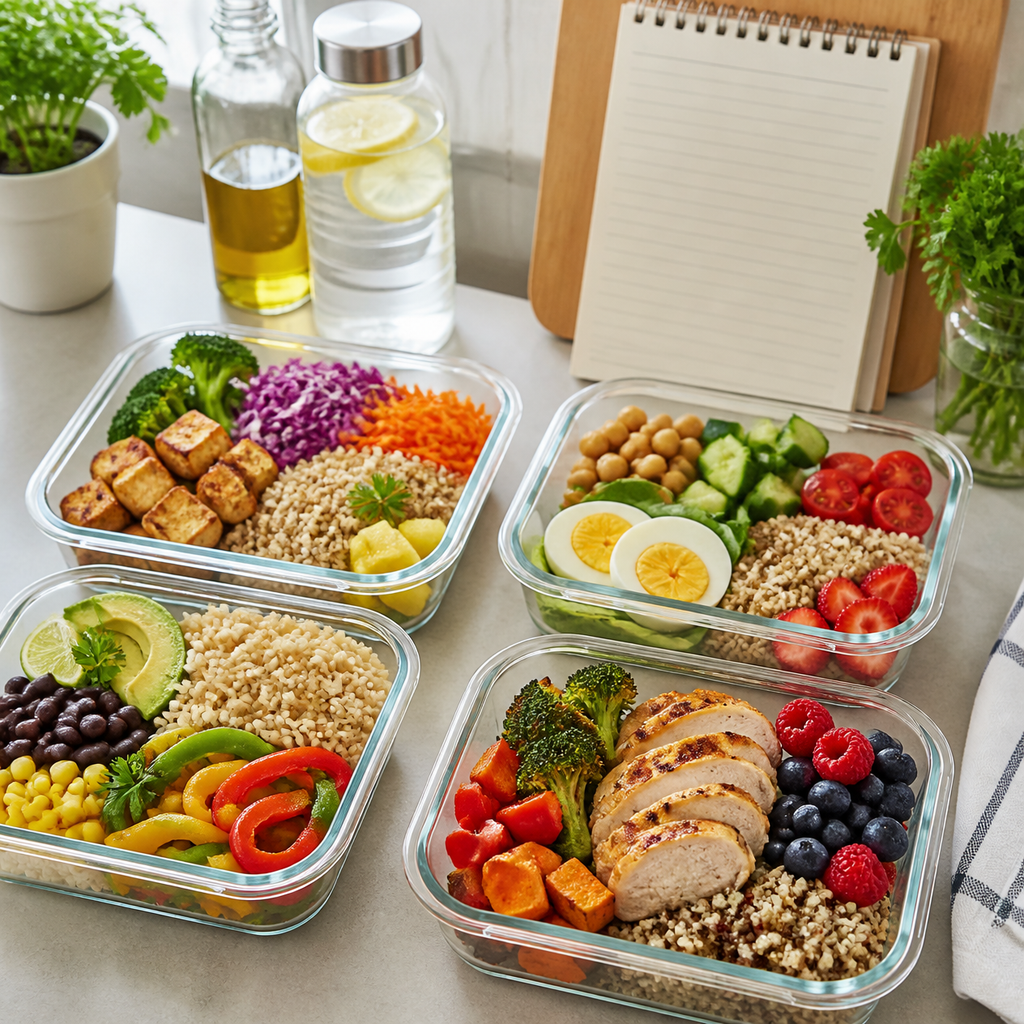
A balanced meal planning worksheet is one of the easiest tools for beginners who want to eat healthier without following a complicated diet. By planning a few repeatable meals, using a simple plate formula, and shopping from a clear grocery list, you can create balanced meals consistently.
Start with seven days, keep the plan flexible, and focus on including vegetables, fruits, whole grains, protein foods, and healthy fats most days. Over time, this simple system can make healthy eating feel less stressful and more sustainable.
Created by -Dr. Arun Solanki
Stay Updated with Grow Tech Education
Digital Marketing, AI Tools, SEO aur Career Growth se related practical guides regular padhne ke liye hamari website visit karein.
Visit Grow Tech Education →Naye articles ke updates ke liye connected rahiye ✨