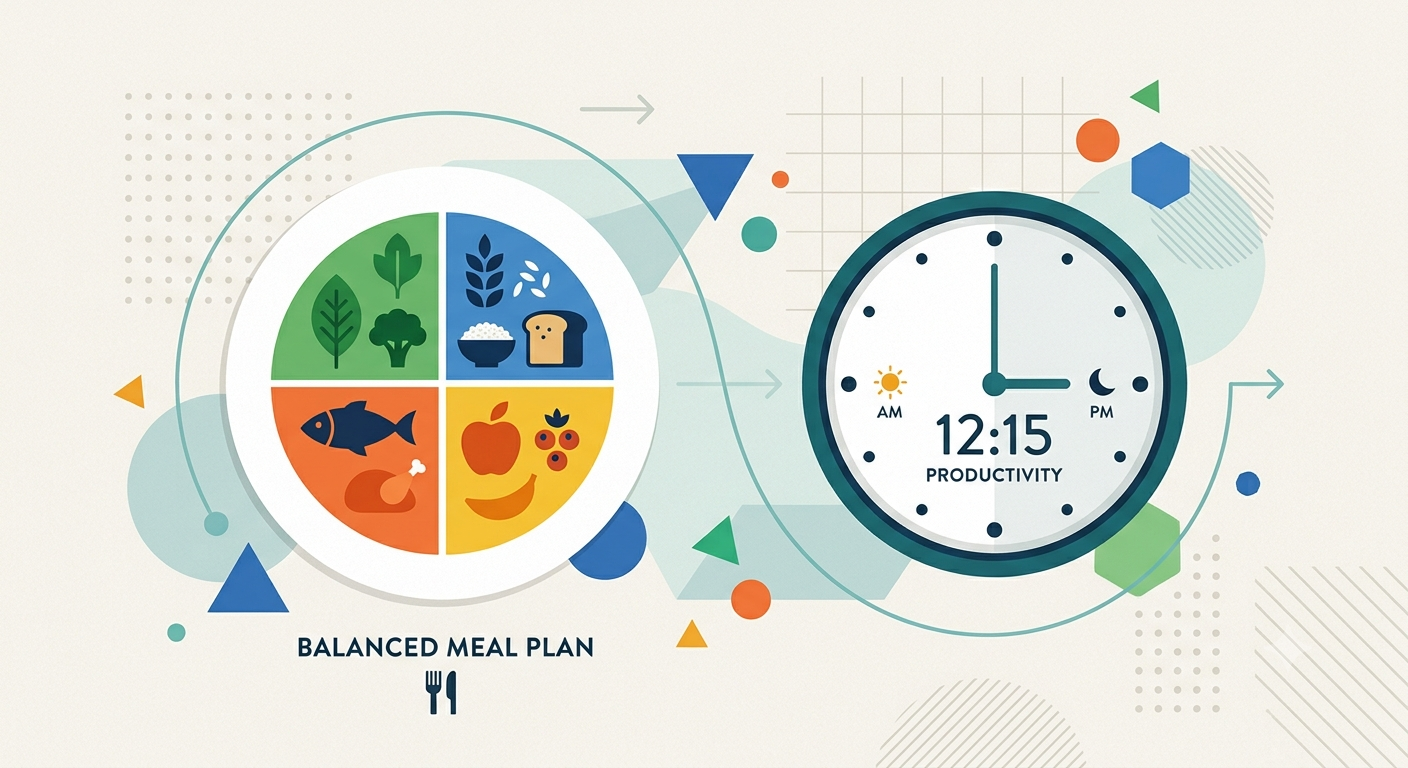
A balanced meal plan for busy workdays does not require elaborate cooking or expensive ingredients. It requires a simple weekly structure: prepare versatile staples, use the “balanced plate” method, and keep nutritious options ready for when work takes over. This approach aligns with the core principles of adequacy, balance, moderation, and diversity recommended by the World Health Organisation (WHO).
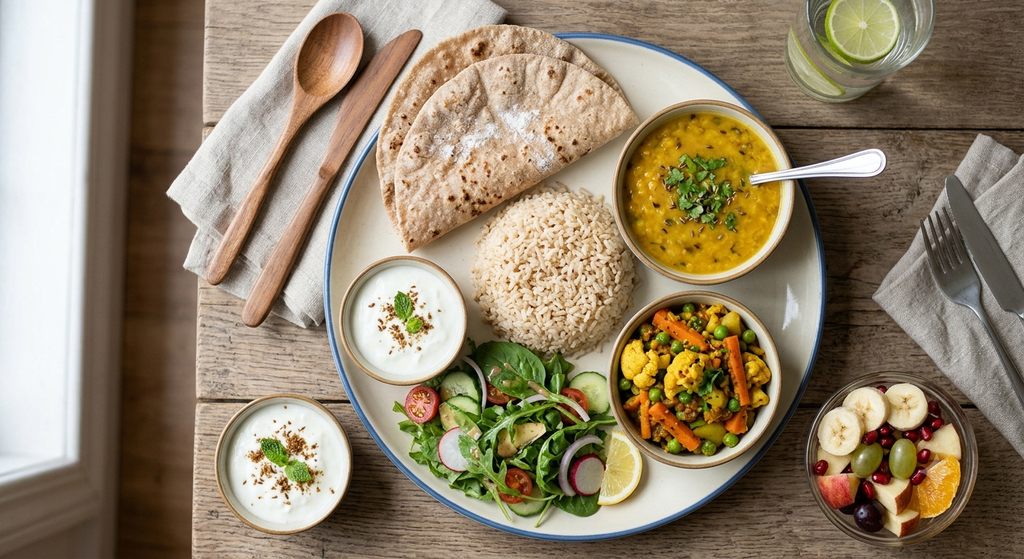
For readers following an Indian or South Asian tradition, the plan can be built around dal, roti, rice, millets, vegetables, curd, eggs, fish, chicken, nuts, and seasonal fruit—without abandoning familiar meals. The ICMR–National Institute of Nutrition (ICMR-NIN) advises eating a variety of foods, including whole grains and millets, pulses or beans, vegetables and leafy greens, fruits, nuts, oilseeds, and protein foods, while limiting foods high in fat, sugar, and salt.
Balanced Meal Plan
What Does “Balanced” Really Mean?
A balanced meal provides carbohydrates for energy, protein for satiety and muscle maintenance, fibre-rich vegetables and fruits, healthy fats, and essential vitamins and minerals. No single food can supply everything, which is why variety across the day matters more than making every individual meal perfect.
A practical visual guide is the plate method: fill half the plate with non-starchy vegetables, one quarter with protein foods such as dal, beans, eggs, paneer, tofu, chicken, or fish, and one quarter with carbohydrate foods such as rice, roti, millet, potato, or whole-grain pasta. This method is widely used in diabetes meal planning and is useful for anyone seeking steadier energy during a long workday.
WHO recommends that adults eat at least 400 g, or five portions, of fruits and vegetables daily; choose whole grains, pulses, nuts, and unsaturated fats; limit free sugars to less than 10% of daily energy; keep total fat under 30% of energy; and keep salt below 5 g per day.
How do I start a weekly meal framework for busy days?
Busy people often fail not because they lack nutrition knowledge, but because they make too many food decisions during a stressful day. A weekly framework removes that burden.
Plan around three main meals and, if needed, one or two simple snacks. ICMR-NIN suggests restricting unnecessary frequent eating and avoiding ultra-processed foods and foods high in fat, sugar, and salt.
Balanced Meal Plan
A Simple Weekly Template
| Meal | Balanced formula | Busy-day examples |
| Breakfast | Protein + whole grain + fruit/vegetable | Vegetable poha with peanuts; besan chilla with curd; oats with milk, nuts, and banana |
| Lunch | Half vegetables, half protein, half whole grain | Dal, sabzi, salad, roti or brown rice; rajma with rice and salad |
| Evening snack | Protein or fruit + fibre | Roasted chana, fruit, curd, handful of nuts |
| Dinner | Lighter protein + vegetables + moderate carbs | Khichdi with vegetables; paneer bhurji with roti; grilled fish with salad |
This structure can be adapted for vegetarian, eggplantarian, non-vegetarian, Jain, or regional food preferences. The key is to repeat the same formula with different ingredients rather than cooking entirely new meals every day.
Balanced Meal Plan
Use the 3-2-1 Meal-Prep Method.
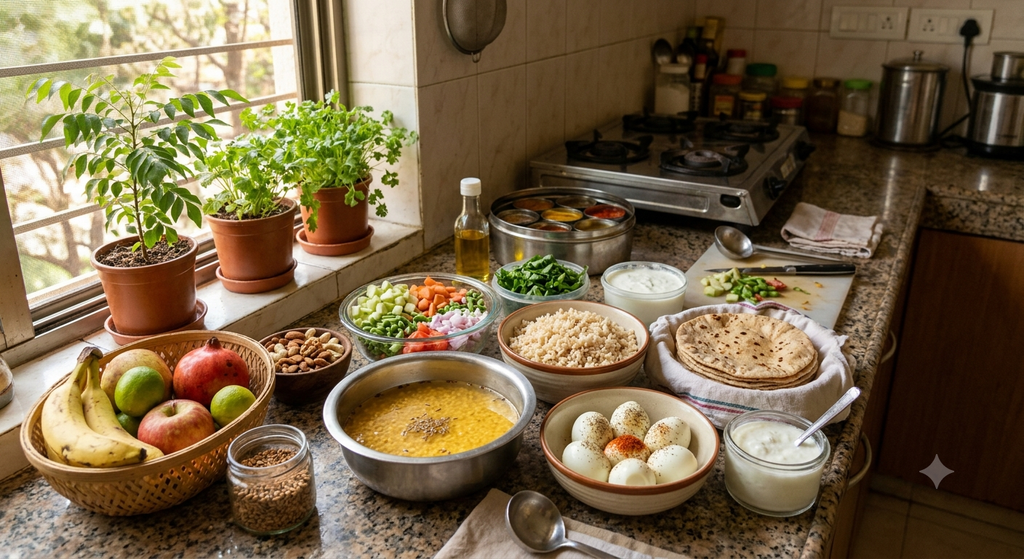
For a busy workweek, prepare three base foods, two protein options, and one vegetable mix in advance.
-
- Three carbohydrate bases: cooked brown rice, millet, or whole-wheat rotis; boiled potatoes or sweet potatoes; and oats or poha ingredients.
-
- Two protein options: dal, chana, rajma, sprouts, curd, paneer, eggs, chicken, or fish.
-
- One flexible vegetable mix: chopped onions, tomatoes, carrots, beans, capsicum, spinach, and seasonal vegetables for sabzi, pulao, wraps, or salads.
ICMR-NIN specifically recommends that at least half of cereals and grains come from whole grains and that cereal-based meals be paired with adequate pulses or beans for better protein and fibre quality. It also recommends 20% to 30% of cereals in adult diets come from millets.
Batch cooking does not mean eating the same meal repeatedly. Cook dal once and use it with rice one day, as a soup with vegetables the next, or stuffed into a whole-wheat wrap later in the week.
Build Workday Lunches That Travel Well
A good office lunch should survive a commute, stay satisfying for several hours, and not depend on reheating oily food.
Reliable Lunch Combinations
-
- Vegetarian: Dal, mixed vegetable sabzi, salad, and 1–2 rotis or a small portion of brown rice.
-
- High-protein vegetarian: Rajma or chole with brown rice, salad, and curd.
-
- Eggetarian: Two boiled eggs or egg bhurji, vegetable pulao, cucumber salad, and fruit.
-
- Non-vegetarian: Grilled chicken or fish with roti, sabzi, and salad.
-
- No-cook option: Whole-grain wrap with paneer or tofu, vegetables, and curd; or sprouts salad with nuts and fruit.
Avoid relying on packaged instant noodles, sugary drinks, deep-fried snacks, and processed meats as regular workday meals. WHO notes that industrial trans fats are often found in processed and fast foods and recommends limiting salt, sugar, and unhealthy fats.
Smart Snacking for Long Workdays
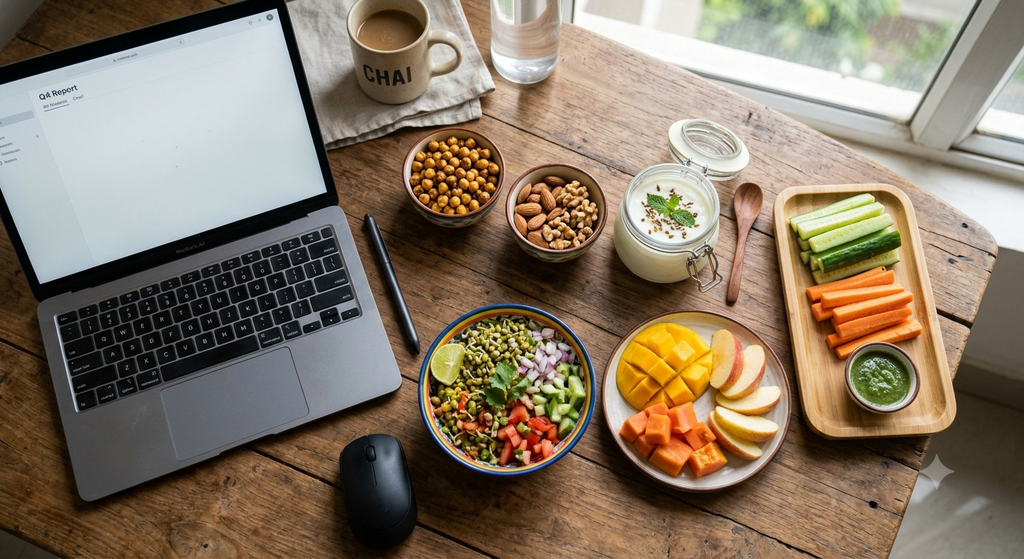
Snacks are useful when they prevent extreme hunger, low energy, or late-night overeating. They should be planned rather than grabbed from a vending machine.
Good options include:
-
- A fruit with a handful of roasted chana or nuts.
-
- Curd or Greek-style yoghurt with seeds.
-
- Vegetable sticks with hummus or peanut chutney.
-
- Sprouts chaat with lemon, onion, and coriander.
-
- A small bowl of poha, upma, or millet porridge if the gap between meals is long.
Nuts and seeds provide healthy unsaturated fats, but portions matter because they are calorie-dense. A small handful is usually enough for most people. WHO recommends shifting fat intake toward unsaturated sources such as nuts, seeds, fish, and plant oils rather than saturated and trans fats.
Balanced Meal Plan
Hydration: The Most Overlooked Part of the Plan
Fatigue, headaches, and difficulty concentrating can sometimes be worsened by inadequate fluid intake. Water should be the default drink during work hours.
WHO’s regional guidance suggests adults drink enough water daily, with roughly 8–10 cups as a practical reference, while cautioning against excessive caffeine and sugary beverages. Keep a water bottle at your desk, drink a glass after each bathroom break, and choose plain tea, coffee, lemon water, or buttermilk without added sugar instead of soft drinks.
Limit sugary chai, packaged juices, energy drinks, and sweetened coffee. WHO advises keeping free sugars below 10% of daily energy, and preferably below 5% for additional health benefits.
Control Salt, Sugar, and Oil Without Losing Taste
Traditional Indian meals can be very healthy, but restaurant-style gravies, fried snacks, pickles, papads, and sweets can quickly increase salt, oil, and sugar intake.
Practical adjustments include:
-
- Use measured oil rather than free-pouring; prefer mustard, groundnut, soybean, canola, olive, or other unsaturated-fat oils where suitable.
-
- Add flavour with lemon, ginger, garlic, curry leaves, coriander, mint, cumin, and spices instead of excess salt.
-
- Use iodised salt, but keep total daily salt below about one teaspoon or 5 g.
-
- Keep sweets and fried foods occasional rather than daily.
-
- Choose whole fruits over juice; whole fruit provides fibre and greater satiety.
ICMR-NIN advises limiting added fat, salt, and sugar, avoiding sugar-sweetened beverages, and restricting added sugar to about 20–25 g per day for adults.
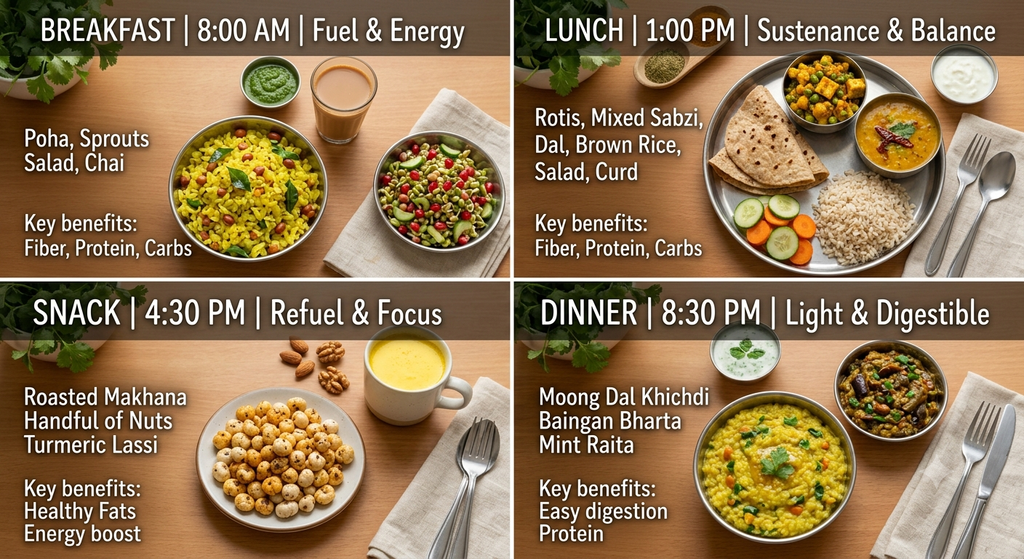
A Sample Balanced Workday Meal Plan
Morning
-
- Warm water or plain tea/coffee.
-
- Vegetable besan chilla with curd, or oats with milk, chia seeds, nuts, and banana.
Mid-morning
-
- One fruit, such as apple, guava, papaya, orange, or seasonal fruit.
Lunch
-
- Dal or rajma.
-
- Mixed vegetable sabzi.
-
- Salad with cucumber, tomato, carrot, and lemon.
-
- 1–2 rotis or a small bowl of brown rice/millet.
-
- Curd or buttermilk.
Evening snack
-
- Roasted chana with tea, or sprouts chaat, or a handful of nuts.
Dinner
-
- Vegetable khichdi with curd, or paneer/tofu bhurji with roti and salad, or grilled chicken/fish with vegetables and a small portion of rice.
This plan supplies fibre, protein, complex carbohydrates, healthy fats, and a wide range of micronutrients while remaining practical for a busy schedule.
Balanced Meal Plan
Adjust for Your Health Needs
General meal-planning advice does not replace individual medical advice. People with diabetes, kidney disease, high blood pressure, pregnancy, food allergies, underweight, obesity, or gastrointestinal conditions may need personalised carbohydrate, protein, potassium, sodium, or calorie targets.
For example, people with diabetes may benefit from eating broadly consistent amounts of carbohydrate at meals and using the plate method to balance vegetables, lean protein, and carbohydrate foods. Anyone starting a new diet, taking regular medication, or managing a chronic condition should consult a registered dietitian or physician.
Make It Sustainable
The best meal plan is one you can follow on a difficult Monday, a late-meeting day, or a stressful deadline week. Keep frozen vegetables, canned beans or ready-to-cook dal, eggs, curd, fruit, and whole-grain rotis available. Cook once, reuse intelligently, and aim for progress rather than perfection.
A balanced workday diet is not about restriction. It is about giving your body enough nourishment to think clearly, work steadily, and still enjoy the food traditions that make meals meaningful.
Frequently Asked Questions
Can I follow this meal plan if I am vegetarian?
How much time does weekly meal prep take?
Is rice unhealthy for workday lunches?
What should I eat if I have no time for lunch?
Can I drink tea or coffee during work?
Do I need supplements to eat a balanced diet?
Is this meal plan suitable for diabetes?
Subscribe and Share
If you found this guide helpful, subscribe to Groww Tech Education for more practical health, finance, and productivity content. Please share this article with friends and colleagues who want to eat better during busy workdays.
Created by – Arun Solanki
Sources
-
- World Health Organization, Healthy Diet fact sheet.
-
- ICMR–National Institute of Nutrition, Dietary Guidelines for Indians, 2024.
-
- WHO Regional Office for the Eastern Mediterranean, healthy eating guidance.
-
- WHO, nutrition and healthy lifestyle recommendations.
-
- U.S. Centers for Disease Control and Prevention, diabetes meal planning and healthy eating tips.