
Part 1: Building a Sustainable Wellbeing Plan
Setting wellbeing goals is one of the best ways to improve your health without falling into extreme dieting, exhausting workout challenges or unrealistic expectations. Many people start a health journey with high motivation, only to quit after a few weeks because the plan feels too difficult. A better approach is to create practical habits that fit your lifestyle and can be kept for months or years. Sustainable wellbeing is not about perfection; sustainable wellbeing is about making choices that support your body, mind and daily routine.

Why Extreme Plans Often Fail
Extreme diets and intense fitness challenges often fail because they demand sudden changes that are difficult to maintain. Cutting out entire food groups, exercising for hours every day, or following a strict routine can create stress, fatigue, and frustration. While short-term results may appear quickly, they rarely last when the plan becomes impossible to follow. Realistic wellbeing goals work better because they focus on progress rather than punishment.
Health organisations commonly recommend gradual, steady weight loss of about 0.5 to 1 kg, or 1 to 2 pounds, per week for people who are trying to lose weight. This pace is generally considered safer and more sustainable than rapid weight loss. Instead of asking, “How fast can I change my body?” ask, “What healthy habit can I maintain this week?” This simple shift makes realistic wellbeing goals more achievable.
Start with small, specific goals.
A major reason people abandon their health plans is that their goals are too vague. Saying “I want to get fit” or “I want to eat healthier” sounds positive, but it does not explain what you will actually do. Realistic wellbeing goals should be specific, measurable, and manageable. For example, instead of promising to exercise every day, you could aim to walk for 15 minutes after dinner three times a week.
The Centres for Disease Control and Prevention recommends focusing on two or three goals at a time and making them specific and realistic. For instance, “I will walk 15 minutes, three days a week for the first week” is more practical than a broad goal such as “exercise more”. Small goals build confidence, and confidence makes it easier to continue. When your goals match your real schedule, realistic wellbeing goals become part of everyday life rather than another burden.
Focus on Habits, Not Perfection
Perfection is not a healthy measure of progress. Missing one workout, eating a dessert, or having a busy week does not mean you have failed. Realistic wellbeing goals allow flexibility because life includes work, family responsibilities, travel, stress, and unexpected events. The goal is to return to your routine without guilt or extreme compensation.
A useful rule is the “never miss twice” approach. If you skip a planned walk today, aim to take a short walk tomorrow. If you eat an unplanned meal, return to balanced eating at the next meal instead of restricting food severely. This mindset supports long-term wellbeing because it prevents one setback from becoming a complete stop. Sustainable habits matter more than flawless days.
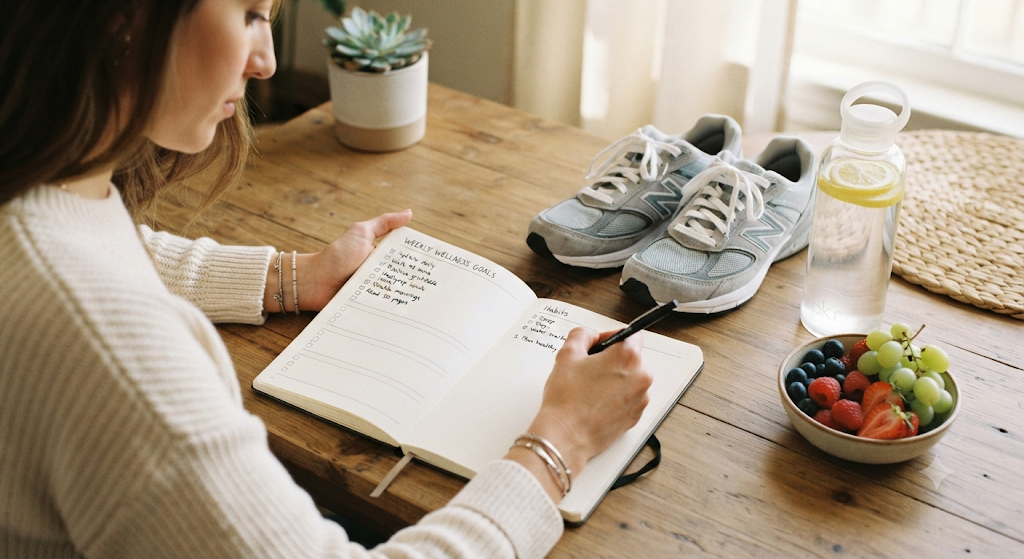
Create a Balanced Eating Approach
Healthy eating does not require a punishing diet. A balanced approach includes enough protein, fibre-rich carbohydrates, healthy fats, fruits, vegetables, and water. Rather than labelling foods as strictly “good” or “bad”, focus on overall patterns. Realistic wellbeing goals should help you eat in a way that supports energy, satisfaction, and long-term health.
The World Health Organisation describes a healthy diet as one that balances energy intake with energy needs while including an appropriate balance of protein, fats, and carbohydrates, along with moderation of foods that may be harmful in excess. You do not need to eliminate every favourite food. Instead, add nutritious foods gradually: include vegetables at lunch, choose fruit as a snack, drink more water, and prepare simple home-cooked meals when possible. These small actions make realistic wellbeing goals easier to follow.
Make Movement Enjoyable
Exercise should not feel like a punishment. Walking, cycling, swimming, dancing, stretching, gardening, and playing a sport all count as physical activity. Choosing movement you enjoy makes it much more likely that you will continue. Realistic wellbeing goals should match your fitness level, preferences, and available time.
For general health, adults are advised to do at least 150 minutes of moderate-intensity aerobic activity each week, or 75 minutes of vigorous activity, or an equivalent combination. Muscle-strengthening activities involving major muscle groups are also recommended on two or more days per week. If you are currently inactive, begin with short sessions and increase gradually. A 10-minute walk is still valuable, and consistency matters more than intensity when building realistic wellbeing goals.
Prioritise Sleep and Stress Management
Wellbeing is not only about food and exercise. Sleep, stress, hydration, and mental health also affect energy, appetite, mood, and motivation. Poor sleep can make healthy choices feel harder, while chronic stress may lead to emotional eating or skipped activity. Realistic wellbeing goals should therefore include recovery, not just effort.
Try setting a consistent bedtime, reducing screen use before sleep, taking short breaks during work, and practising deep breathing or journaling. You do not need a complicated wellness routine. Even five minutes of quiet breathing or a short evening walk can support mental balance. When sleep and stress are managed, it becomes easier to maintain realistic wellbeing goals over time.
Part 2: Turning Wellbeing Goals Into Lasting Results
Track Progress Without Obsession
Tracking can help you understand what is working, but it should not become an obsession. Instead of weighing yourself daily or counting every calorie, track simple behaviours such as walks completed, meals prepared at home, glasses of water consumed, or hours of sleep. Realistic wellbeing goals are easier to maintain when progress is measured through habits rather than appearance alone.
Use a notebook, phone notes, or a simple calendar to mark completed actions. Review your progress weekly rather than judging yourself every day. If a goal feels too easy, make it slightly more challenging. If it feels overwhelming, reduce it. Adjusting your plan is not failure; it is a smart way to keep realistic wellbeing goals practical and sustainable.
Build a Supportive Environment.
Your environment has a powerful effect on your choices. Keeping fruit visible in the kitchen, placing walking shoes near the door, preparing simple meals in advance, and keeping water nearby can make healthier decisions easier. Realistic wellbeing goals become stronger when your surroundings support them.
You can also involve family members, friends, or coworkers in supportive ways. Share a walk, cook a healthy meal together, or check in once a week about progress. Avoid comparing your journey to social media fitness trends, because many online routines are unrealistic or highly staged. Your wellbeing plan should fit your life, not someone else’s highlight reel.
Use Non-Food Rewards
Rewards can help reinforce positive habits, but they do not need to involve food. After completing a weekly goal, reward yourself with a new book, a relaxing bath, a movie, a hobby, or time with friends. Realistic wellbeing goals should feel rewarding, not restrictive.
Celebrating small wins helps your brain connect healthy habits with positive feelings. For example, if you complete four walks in a week, acknowledge that achievement before moving to the next target. This approach builds momentum and makes long-term consistency more likely. Progress should be recognised, even when it seems small.

Review and Adjust Your Plan
A wellbeing plan should change as your life changes. A routine that works during a calm month may need adjustment during a busy work period, travel, illness, or family responsibilities. Realistic wellbeing goals should be flexible enough to survive real life.
Every two to four weeks, ask yourself three questions: What is working? What feels difficult? What small change could make this easier? Maybe you need shorter workouts, simpler meals, more sleep, or a different form of movement. Regular review keeps your plan realistic and prevents burnout. The best wellbeing routine is the one you can adapt without giving up.
Know When to Seek Professional Support
While general lifestyle changes can support most people, individual needs vary. If you have a medical condition, take regular medication, are pregnant, have a history of disordered eating, or experience persistent pain, speak with a qualified healthcare professional before making major changes. Realistic wellbeing goals should always respect your personal health situation.
A registered dietitian, doctor, physiotherapist, or mental-health professional can help create a plan that is safe and suitable for you. Seeking support is a sign of responsibility, not weakness. Wellbeing is personal, and professional guidance can make your goals safer and more effective.
Final Thoughts
You do not need diets, exhausting fitness challenges or a perfect routine to improve your health. Realistic wellbeing goals are built through actions, consistent habits, balanced eating, enjoyable movement, quality sleep and self-compassion. Focus on what you can maintain, not what looks impressive for a week.
Start with one goal today: take a short walk, add a vegetable to one meal, drink more water or go to bed 30 minutes earlier. Over time, these small decisions create change. When your plan fits your life, realistic wellbeing goals become a path toward better physical and mental health.
Created by- Arun Solanki
Like, share, and subscribe to GrowwTech Education for more beginner-friendly blogging and SEO guides!